Photo (resized): Erwan Hesry, CC0 via Wikimedia Commons.

Direct answer: Leave items that are banned in both bags at home, including fireworks, fuels, torch lighters, strike-anywhere matches, bear spray, spray paint, liquid bleach, and alcohol over 140 proof. Put knives, bats, and similar restricted gear in a checked bag if you need them at all. Keep power banks, spare lithium batteries, and vapes in your carry-on, never in checked luggage. For liquids, use travel-size containers of 3.4 ounces (100 milliliters) or less in one quart-sized bag, or pack full-size bottles in a checked bag. Then cut anything that is allowed but not worth the weight.
You won't forget anything because I won't let you.
Which items are prohibited in both carry-on and checked bags?
Start with the official lists. TSA's What Can I Bring pages and the complete alphabetical list cover security rules. The FAA's PackSafe chart covers hazardous materials, which are a separate set of safety rules. When the two overlap, follow the stricter limit. If you are not sure, leave the item out.
These common items are not allowed in carry-on or checked bags: fireworks, flammable liquid fuels such as cooking fuel, propane, butane, lighter fluid, cooking spray, torch lighters, strike-anywhere matches, bear spray, spray paint, liquid bleach, and alcoholic beverages over 140 proof(more than 70% alcohol), including grain alcohol and 151 proof rum. TSA also prohibits gun powder, including black powder and percussion caps.
A camp stove may go in carry-on or checked bags only if it is empty of all fuel and cleaned so that no fuel vapors or residue remain. The fuel itself stays home.
On every What Can I Bring item page, TSA states that the final decision rests with the TSA officer on whether an item is allowed through the checkpoint. Follow the officer's instructions, and check local rules at airports outside the United States.
Cannabis is a separate case. TSA's medical marijuana page says its screening is focused on security and that officers do not search for illegal drugs, but if any illegal substance or evidence of criminal activity is discovered during screening, TSA will refer the matter to a law enforcement officer. Federal marijuana rules changed in part in 2026 and are still under review, and state and local laws vary, so do not assume a medical card makes it legal to fly with cannabis. This post does not advise packing cannabis.
Which items are restricted in carry-on but may go in a checked bag?
Knives are not allowed in carry-on bags, except knives with rounded blades and blunt edges without serration, such as butter knives, or plastic cutlery. Box cutters and razor blades that are not in a cartridge also stay out of the carry-on. Disposable razors are allowed in both bags. Scissors may go in a carry-on if they are less than 4 inches from the pivot point. Any sharp objects in a checked bag should be sheathed or securely wrapped.
Tools 7 inches or shorter may be allowed in carry-on baggage. Power tools and all other tools greater than 7 inches must go in a checked bag. Baseball bats and other sports equipment that can be used as a bludgeon, such as bats and clubs, are prohibited in the cabin and must travel in checked baggage.
Pepper spray is not allowed in carry-on bags. TSA allows one 4 fl. oz. (118 ml) container of mace or pepper spray in checked baggage if it has a safety mechanism to prevent accidental discharge. Self-defense sprays with more than 2 percent by mass of tear gas (CS or CN) are prohibited in checked baggage. TSA recommends checking with your airline, because some may not allow the item.
Firearms are not allowed in carry-on bags. TSA says firearms may travel as checked baggage only, unloaded, in a locked hard-sided container, and declared to the airline at check-in. Check with your airline, and see TSA's transporting firearms and ammunition page. Firearm possession laws vary by local, state, and international government, so check them for every place on your trip. Stun guns are not allowed in carry-on bags and have special instructions for checked bags. Aerosol insecticides are not allowed in carry-on bags; they may go in checked bags if they are not labeled as hazardous material.
How should you pack liquids, aerosols, and gels?
TSA's liquids, aerosols, and gels rule allows a quart-sized bag of liquids, aerosols, gels, creams, and pastes in your carry-on and through the checkpoint, limited to travel-sized containers that are 3.4 ounces (100 milliliters) or less per item. Pack containers larger than 3.4 ounces or 100 milliliters in checked baggage. Our guide to the TSA liquids rule covers everyday toiletries and the exceptions for medication and children's nourishment, so this post does not repeat that full walkthrough.
An empty water bottle is allowed in both bags. A full bottle of water has to meet the 3.4 ounce carry-on limit. Snow globes that appear to contain less than 3.4 ounces of liquid, about tennis ball size, may go in a carry-on only if the entire globe, including the base, fits in your one quart-sized bag. Larger snow globes belong in checked baggage.
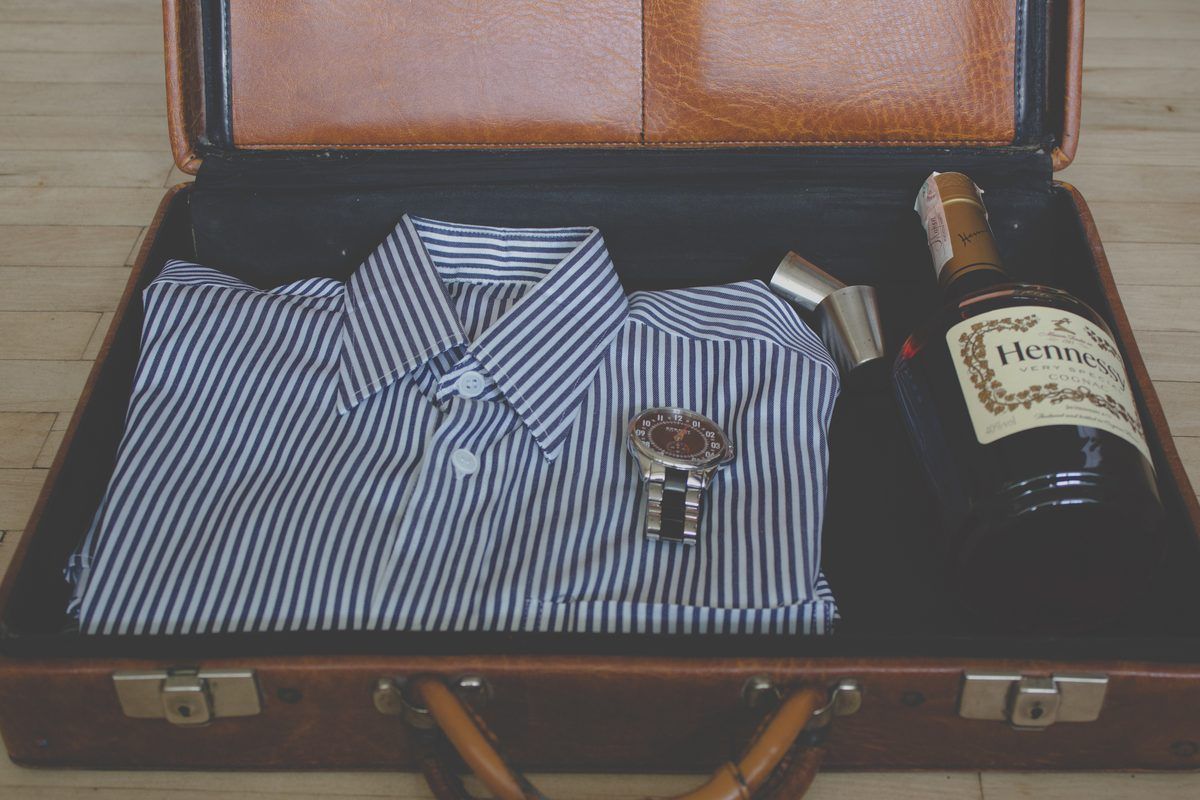
For alcoholic beverages, check with your airline before you pack a bottle. Beverages with more than 24% but not more than 70% alcohol are limited in checked bags to 5 liters (1.3 gallons) per passenger and must be in unopened retail packaging. Beverages with 24% alcohol or less are not subject to those checked-bag quantity limits. Mini bottles in a carry-on must fit comfortably in the same quart-sized bag as your other liquids. Alcohol over 140 proof is not allowed in either bag.

What must stay in your carry-on and out of checked bags?
Power banks are carry-on only. TSA's power banks page says portable chargers or power banks containing a lithium ion battery must be packed in carry-on bags, and that spare lithium batteries, which include both power banks and phone chargers, are prohibited in checked luggage. Do not put a power bank in a checked bag. The FAA's PackSafe page also says power banks, spare batteries, and lithium batteries with a capacity of less than 160 watt hours must remain with passengers in the aircraft cabin, and that large power banks, power stations, and generators with a capacity of more than 160 watt hours are not allowed on passenger aircraft. Its lithium batteries page limits spare lithium ion batteries to 100 watt hours each, and with airline approval you may carry up to two spares rated 101 to 160 watt hours. Many airlines set stricter limits, so check with yours before you fly.
If a carry-on is checked at the gate or at planeside, the FAA says any spare lithium batteries must be removed from the bag and kept with the passenger in the cabin. The same idea applies to electronic cigarettes and vaping devices, which TSA allows only in carry-on baggage, with measures to prevent the heating element from turning on by accident. Damaged or recalled batteries and battery-powered devices that are likely to spark or overheat must not be carried unless the battery has been removed or otherwise made safe.
For lighters and matches, the banned items in the first section still apply: torch lighters, lighter fluid, and strike-anywhere matches stay home. TSA allows one book of safety matches in a carry-on and prohibits all matches in checked baggage. Disposable and Zippo lighters without fuel are allowed in checked bags; lighters with fuel are prohibited in checked bags unless they meet a Department of Transportation exemption for up to two fueled lighters in a DOT-approved case. The FAA limits absorbed-liquid and butane lighters to one lighter per passenger in carry-on or on your person, and says that if a carry-on is checked at the gate, the lighter must come out and stay with you in the cabin. The simple move is to keep one ordinary lighter on you or in your carry-on.
What is allowed but not worth packing?
Plenty of items are allowed and still a poor use of space. On a carry-on trip, full-size toiletries will be pulled at the checkpoint, so pack travel-size bottles or plan to buy shampoo after you arrive. A hanging toiletry kit is for those travel-size bottles, not for sneaking full-size ones through screening ( Hanging Travel Toiletry Bag).
Leave the third pair of shoes that does not match a planned activity, the backup outfits you will not wear, heavy books you will not read, and bulky hair tools if the room already has a dryer. Our list of 10 packing mistakes to avoid covers the just-in-case habit and other packing-process errors. This post is about the items themselves: what is banned, what is restricted, and what is not worth the weight even when the rules allow it.
Packing cubes will not change a TSA rule, but they make extras easier to see and leave at home ( Compression Packing Cubes). Our guide on how to use packing cubes shows how to split a bag by category. For a carry-on kit, start with the carry-on packing list or how to pack for a week in a carry-on.
What not to pack on a plane checklist
- Check TSA's What Can I Bring list and the FAA PackSafe chart for any unusual item
- Leave fireworks, fuels, torch lighters, strike-anywhere matches, bear spray, spray paint, liquid bleach, and alcohol over 140 proof at home
- Pack knives, box cutters, bats, and tools longer than 7 inches in a checked bag only, sheathed or wrapped as required
- Keep pepper spray out of the carry-on; if you pack it, follow the 4 ounce checked-bag limit, the safety-cap rule, and your airline's policy
- Use travel-size liquids of 3.4 ounces or less in one quart-sized bag, or put full-size bottles in a checked bag
- Keep power banks, spare lithium batteries, and vapes in your carry-on, never in checked luggage
- If a carry-on is gate-checked, take power banks, spare batteries, and any lighter out of the bag
- Pack one book of safety matches or one ordinary lighter in the carry-on or on your person, not in checked bags
- Skip extras that are allowed but not worth the weight, including just-in-case gear and full-size toiletries on a carry-on trip
- The TSA officer has the final say at the checkpoint

Hanging Travel Toiletry Bag (Black)
A hanging kit for the travel-size toiletries that belong in your bag, not full-size bottles.
From our shop: we sell this product and earn from purchases.
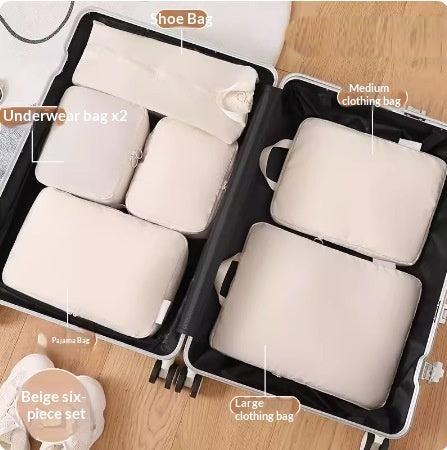
Compression Packing Cubes, 6-Piece Set (Beige)
Six zippered cubes that keep clothes grouped so extras are easier to leave home.
From our shop: we sell this product and earn from purchases.
What not to pack on a plane FAQ
Can I pack a power bank in a checked bag?
No. TSA says portable chargers or power banks that contain a lithium ion battery must be packed in carry-on bags, and spare lithium batteries, including power banks, are prohibited in checked luggage. If a carry-on is checked at the gate, take the power bank out and keep it with you in the cabin.
Can I bring a knife or scissors in my carry-on?
Most knives are not allowed in carry-on bags. TSA makes an exception for rounded-blade butter knives and plastic cutlery. Scissors may go in a carry-on if they are less than 4 inches from the pivot point. Put other knives and longer scissors in a checked bag, sheathed or securely wrapped.
Can I pack full-size shampoo in my carry-on?
No. TSA allows liquids, aerosols, gels, creams, and pastes in a carry-on only in travel-sized containers of 3.4 ounces (100 milliliters) or less, all in one quart-sized bag. Pack full-size bottles in a checked bag, or buy them after you arrive.
Can I bring a lighter or matches on a plane?
Torch lighters, lighter fluid, and strike-anywhere matches are not allowed in carry-on or checked bags. TSA allows one book of safety matches in a carry-on, and it prohibits all matches in checked bags. Keep one disposable or Zippo-style lighter on you or in your carry-on. Do not put a fueled lighter in checked luggage unless it meets the special DOT case rule.
What should I leave home even if it is allowed?
Leave extras that do not earn their weight: a third pair of shoes with no planned use, full-size toiletries on a carry-on trip, bulky hair tools if your room already has them, and other just-in-case items. If you are not sure you will use it, leave it out.